How to Stay Warm in Portugal Without a €00 Monthly Heating Bill: 3 Methods Tested

Author: Sofia Ribeiro|Last Updated: April 13, 2026
During the first week of January 2026, I received an electricity bill for €9 at my apartment in Évora. For a single person living in less than 70 square meters, that number gave me pause. Looking at the breakdown, I saw that my consumption over the previous seven days had nearly tripled compared to normal €that was the week nighttime temperatures in inland Portugal plummeted to -5°C.
This is hardly typical weather for Portugal, but it's far from a fluke. On January 1, 2026, an Arctic cold front swept across Europe, driving temperatures across the Iberian interior down to between 0°C and -5°C. In the inland Alentejo region, January average lows hover around 2.3°C. Those numbers don't sound extreme on paper, but when you're living in a traditional Portuguese building, the problem becomes visceral: indoors can feel colder than outside.
For remote workers planning to settle in inland Portugal under the D8 visa, heating is never an "optional extra" €it's a basic requirement for surviving winter. Yet Portugal's building stock and energy prices make heating far more complicated than most newcomers expect. This article takes a typical 60€0 square meter Portuguese rural apartment or house as its test case, simulates a seven-day -5°C cold snap with a target indoor temperature of 16€8°C, and compares the real costs and experience of three different heating approaches.
Portugal's Thermal Black Hole: Why Are the Bills So High?
Before discussing specific heating methods, we need to understand a fundamental question: Why do heating bills in Portugal hit so hard?
The answer lies in the construction. Traditional Portuguese buildings were erected with virtually no insulation standards. It wasn't until 2006 that Portugal introduced the RCCTE regulations, which for the first time set clear requirements for thermal insulation and energy efficiency in new buildings. The vast stock of older housing €especially in rural areas €has no insulation to speak of, single-pane windows remain common, and central heating is far from standard.
A 2026 building study in Santarém quantified the gap: traditional Mediterranean construction has an exterior wall U-value averaging around 1.4 W/m²·K, while contemporary buildings meeting NZEB (Nearly Zero Energy Building) standards achieve a U-value of just 0.13 W/m²·K €a difference of more than tenfold. Correspondingly, traditional buildings consume roughly 150 kWh/m² per year for winter heating, compared to just 35 kWh/m² per year for modern construction. To make this more tangible: long-term monitoring at a traditional granite house in the Montesinho Natural Park in northeastern Portugal found bedroom temperatures averaging 11.6°C in winter, dropping as low as 7.7°C; a guest bedroom averaged only 7.9°C €well below what most people would consider livable.
According to INE (Statistics Portugal) survey data from 2025, over 54% of housing built before 1960 has undergone no energy efficiency retrofitting to this day. What this means in practice: if you rent an "authentic" traditional house in rural inland Portugal, a significant portion of your electricity bill is effectively paying to heat the outdoors.
2026 Energy Prices: The Numbers You Need to Know
Before diving into the three heating scenarios, let's establish the baseline energy prices for 2026.
Electricity rates: Portugal's energy regulator ERSE announced a 1% increase in regulated market end-user electricity tariffs for 2026. GlobalPetrolPrices data shows Portugal's residential electricity price at approximately €.224/kWh (September 2025 figures, with slight upward adjustment in 2026). Importantly, liberalized market suppliers such as EDP Comercial and Galp actually reduced their prices by 0.5%€% in 2026, making the free market cheaper than the regulated tariff.
LPG (bottled gas) prices: As of March 30, 2026, LPG in Portugal cost approximately €.958 per liter. A standard 11 kg propane cylinder (roughly 12.5 liters) costs around €0€2 per bottle.
Natural gas prices: In April 2026, natural gas prices surged 8.6% to €7.66/MWh, pushing up the cost of piped gas heating for households accordingly.
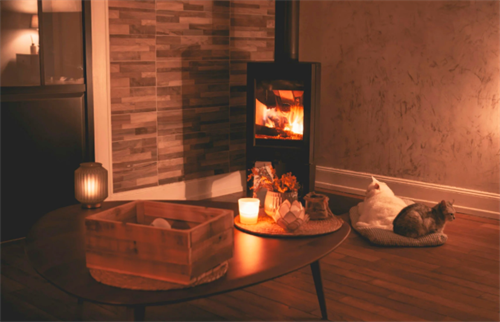
Three Heating Methods: Cost Showdown over a -5°C Week
The following calculations assume a typical 60€0 m² Portuguese apartment or house, with heating running approximately 12€4 hours per day (covering nighttime sleeping hours and early morning/evening periods when occupants are home), targeting an indoor temperature of 16€8°C.
Option 1: Portable Electric Heaters (Most Common, Most Expensive)
This is the first choice for most remote workers arriving in Portugal: buy a couple of oil-filled radiators or fan heaters, plug them in, and hope for the best. In late January 2026, Storm Kristin battered Portugal with record-breaking winds exceeding 200 km/h, leaving over 855,000 households without power. For those lucky enough to keep their electricity on, however, the running costs of electric heaters during a cold snap proved sobering.
Equipment costs: Oil-filled radiators run €0€00 each; two to three units to cover a whole home cost roughly €50€50. Fan heaters cost €0€0 each. Amortized over a three-year lifespan, that's about €€ per month.
Energy consumption: With two 1,500W oil-filled radiators plus one fan heater running intermittently (not continuously), operating roughly 12€4 hours per day, weekly consumption lands between 280 and 350 kWh. At €.23/kWh, the heating-specific electricity cost for the cold week is approximately €4€0. Adding baseline electricity use (lighting, refrigerator, water heater, etc.) of roughly €5€0 per week, the total weekly bill reaches €9€00.
Hidden costs: Older rural Portuguese homes are typically wired for loads below 6.9 kVA; running two or more high-wattage heaters simultaneously can trip breakers. Electric heaters don't address humidity issues €walls can still develop condensation. And in terms of comfort, stepping away from the heater's immediate vicinity brings an instant, unpleasant temperature drop.
Option 2: Bottled Gas / LPG Heaters (Common in Rural Areas)
In remote villages with unreliable electricity grids, bottled gas heaters are a mainstay for many local residents. They don't depend on the grid and keep working during storm-related blackouts.
Equipment costs: A bottled gas heater costs €0€50; a gas cylinder deposit runs €0€0 (refundable); a carbon monoxide detector is €0€0 (an essential safety item).
Energy consumption: A standard 11 kg propane cylinder (about 12.5 liters) lasts approximately 30€0 hours on a medium flame. With 12 hours of daily operation, a cold week consumes roughly 2 to 2.5 cylinders. At €.958 per liter, the fuel value alone is about €2 per cylinder (excluding cylinder deposit and delivery fees); actual retail price is typically €0€2 per bottle. Weekly fuel cost: €0€5.
Safety and regulatory considerations: Regulations around indoor use of portable bottled gas heaters in Portugal are tightening. Many landlords and insurance policies now prohibit their use indoors. Ventilation is mandatory €a window must remain cracked open, which inevitably lets heat escape. The risk of carbon monoxide poisoning is especially acute in older, poorly sealed dwellings. Portugal's government is actively promoting electrification through the E-LAR program, which has a €0 million budget and accepts applications from September 30, 2025, through June 30, 2026, to subsidize replacement of gas appliances with high-efficiency electric heating.
Weekly gas cost summary: Fuel cost approximately €0€5 per week. Advantages: unaffected by power outages, comfortable radiant heat. Disadvantages: frequent cylinder changes (potentially running out in the middle of a freezing night), mandatory ventilation, and ongoing safety vigilance.
Option 3: Heat Pump + Insulation Upgrades (The Long-Term Play)
For remote workers planning to stay in inland Portugal for the long haul (12+ months), a heat pump is currently the lowest-operating-cost option.
Equipment costs: A split-system air conditioner with heat pump (heating and cooling) costs €00€,500 installed; amortized over five years, that's roughly €3€5 per month. Low-cost retrofits: window sealing strips (€5€0) + door draft stoppers (€0) + thermal curtains (€0€0 per window) = roughly €0€50 total.
Energy consumption: Heat pumps typically have a coefficient of performance (COP) of 3 to 4, meaning 1 kWh of electricity produces 3€ kWh of heat. Maintaining the same 16€8°C target, power consumption is roughly one-third that of electric resistance heaters. Weekly consumption for the cold snap: approximately 90€30 kWh. At €.23/kWh, the heating-specific electricity cost is €1€0 €about one-third of Option 1.
The Santarém 2026 building study offered a noteworthy conclusion: a hybrid approach (traditional building wisdom + targeted technological upgrades) can reduce energy consumption by roughly 50% at an additional cost of only about 28%, with a payback period of around 33 years. For renters, the key takeaway is: prioritize rentals that already have a heat pump installed; if the unit only has electric heaters, negotiate with the landlord to share installation costs; and combine with low-cost sealing measures, which can reduce heat loss by 20€0%.
E-LAR subsidy application guide (2026): This program, administered by the Environmental Fund (Fundo Ambiental), has a €0 million budget and covers 100% of the cost of replacing gas equipment with high-efficiency electric heating. Priority is given to social tariff beneficiaries (€4.4 million allocation), but ordinary individuals can also apply (€0 million allocation). The application deadline is June 30, 2026. Submit applications at www.fundoambiental.pt/e-lar.aspx. Required documents include proof of home ownership or rental agreement, photos of the old gas equipment, and receipts for the new equipment. Subsidies are first-come, first-served €apply early.
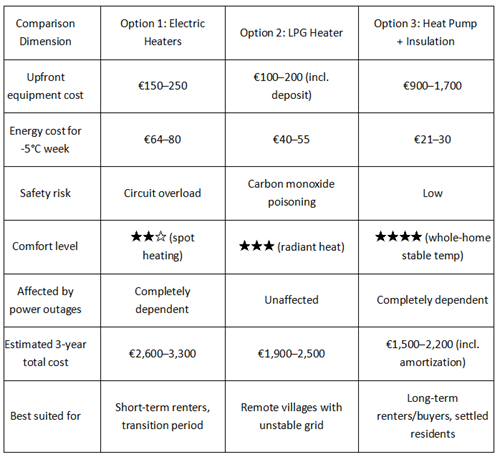
Cost Comparison Summary: Three Approaches
Digital Survival in the Cold: When Heating Meets Power Outages
For remote workers, winter heating is about more than comfort €it's about the ability to work. In late January and early February 2026, Portugal was hit by a series of intense storms. Storm Kristin brought record-breaking winds over 200 km/h and left more than 855,000 households without power. Mobile network download speeds plummeted 52.4% from 107.3 Mbps to 51.1 Mbps; upload speeds dropped 46.6%.
Yet one data point stood out: during the storms, Starlink user activity in Portugal surged by roughly 196%. Many remote workers relied on Starlink to maintain connectivity when both the grid and terrestrial networks failed. For remote workers in remote villages using gas heating, Starlink (starting at €9/month for 100€70 Mbps) combined with a gas heater creates a complete "grid-independent work + life system."
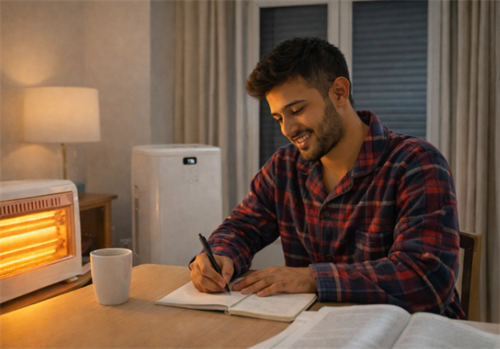
Six Actionable Strategies to Keep Warm and Control Costs:
Strategy 1: Switch to a Liberalized Market Electricity Supplier
Regulated market rates rose 1% in 2026, but EDP Comercial's free market rates actually dropped 1%, and Galp dropped 0.5%. Use the comparison tool at erse.pt to switch.
Strategy 2: Plug Window Leaks
€5€0 window sealing strips (available at Leroy Merlin, AKI) plus €0€0 thermal curtains can reduce heat loss by 20€0%. Close exterior shutters (estores) at night to create an extra insulating air gap.
Strategy 3: Heat the Person, Not the Space
An electric blanket (€5€0) consumes just 50€00W €93€7% less energy than a 1,500W heater. Pair with a timer on electric heaters so they run only for an hour before waking and two hours before bed.
Strategy 4: Use a Dehumidifier Strategically
Winter humidity in Portugal often exceeds 70%, and heating humid air costs far more than heating dry air. A dehumidifier (€0€50, 200€00W consumption) lowers humidity first; follow with heating and the perceived temperature can rise by 2€°C.
Strategy 5: Choose a Rental with Winter Experience
Before signing a lease, ask the landlord: Is there a heat pump (air conditioning with heating)? Are the windows double-glazed? Is the unit south-facing? Check the Energy Certificate (Certificado Energético); ratings A+ to B- are good; C or below warrants caution.
Strategy 6: Plan a Non-Electric Backup
In remote rural areas, keep at least 72 hours' worth of gas heating capability. For routers/Starlink, invest in a small UPS (€0€0, 2€ hours of runtime). Install the EDP app on your phone for real-time outage alerts.
Conclusion
If you're only spending one winter in Portugal €Option 1 can get you through, but be mentally prepared for an €0+ electricity bill during a cold snap and inspect the circuit breaker panel carefully when viewing rentals.
If you've chosen a remote village with spotty connectivity or a house with old wiring €Option 2's gas heater is a reliable backup, but absolutely equip the space with a carbon monoxide detector and ensure proper ventilation.
If you plan to settle long-term (12+ months) €Option 3 is the only financially sustainable choice. Prioritize rentals with an existing heat pump, add window sealing and thermal curtains, and you can keep winter heating costs to roughly one-third of what electric heaters would cost.
For remote workers, an inland Portuguese winter is a genuine test €not just of your budget, but of your ability to gather information and adapt. Choosing the right heating method can mean a winter of completely manageable expenses; choosing wrong might mean facing electricity bills each month that make you question every life choice.
FAQ
Q1: How much should I budget monthly for winter heating in rural Portugal in 2026?
A: It depends heavily on your housing and heating method. Based on a -5°C cold snap week, the most economical Option 3 (heat pump) runs roughly €0€30 per month including baseline electricity; Option 2 (gas) roughly €60€20/month; Option 1 (electric heaters) roughly €50€50/month. For a full winter heating season (December–February), budget €00€00 depending on your setup.
Q2: Are portable gas heaters legal indoors in rural Portugal?
A: There is currently no blanket ban on indoor use of portable bottled gas heaters in Portugal, but safety regulations are tightening. Many landlords explicitly prohibit them in lease agreements. If you do use one, a carbon monoxide detector is non-negotiable, and you must keep a window cracked for ventilation. The government's E-LAR program signals a clear policy shift toward electrification.
Q3: How do I apply for the Social Tariff (Tarifa Social)? Do I qualify?
A: The Social Tariff provides a 33.8% discount on electricity. Eligibility requires annual income below €,808 (for a single person) or other specific criteria like being a social security beneficiary. Submit an application form to your electricity supplier, who will automatically verify eligibility through the tax authority's system. Most D8 visa holders will likely exceed the income threshold, but it's worth checking.
Q4: How do I apply for the E-LAR subsidy, and what does it cover?
A: The E-LAR program covers 100% of the cost of replacing gas equipment with high-efficiency electric heating, up to €,100 for ordinary applicants. Apply at www.fundoambiental.pt/e-lar.aspx by June 30, 2026. Documents required: proof of home ownership/rental, photos of old gas equipment, and receipts for new equipment. Applications are first-come, first-served.
Q5: How can I keep working remotely during storm-season power outages?
A: A three-tier backup plan is recommended: Basic €a small UPS (€0€0) for your router. Remote areas €consider Starlink (from €9/month) plus a high-capacity power bank. Extreme cases €know the location of the nearest coworking space or café (urban areas tend to have power restored faster).
Q6: How can I assess a rental's winter warmth before signing?
A: A viewing checklist: €Are the windows double-glazed (vidro duplo)? €Is there an air conditioning unit with a heat pump (heating mode)? €Are there any signs of damp or mold on walls? €Ask the landlord for typical winter electricity/gas bills. €Check the Energy Certificate (Certificado Energético); ratings A+ to B- are good; C or below warrants extra caution.
References:
[1] Axar.az. (2026, January 1). Severe Arctic cold hits Europe. https://en.axar.az/news/world/1048263.html
[2] ERSE. (2025, December 15). ERSE announces electricity tariffs in 2026 and parameters for 2026-2029. https://edp.com/en/investors/investor-information/market-notifications/erse-announces-electricity-tariffs-2026-and
[3] GlobalPetrolPrices. (2026, March 30). Portugal energy prices. https://zh.globalpetrolprices.com/Portugal/
[4] Portugal Homes. (2026, February 18). Cold Houses in Portugal: The Olarias Case Study. https://www.portugalhomes.com/blog/cold-houses-portugal-olarias-case-study
[5] Scientific.Net. (2026, February). Integrating Vernacular Wisdom and Contemporary Performance in Mediterranean Residential Architecture: Santarém, Portugal Case Study. https://www.scientific.net/AST.173.33
[6] Baião Sustentável. (2025, September 30). E-LAR Programme. https://baiaosustentavel.pt/en/e-lar-programme/
About the Author
Sofia Ribeiro
Licensed Energy Engineer (Ordem dos Engenheiros) | M.Sc. Sustainable Energy Systems, University of Lisbon
Track Record: 150+ digital nomads assisted with D8 visa housing energy assessments since 2021; €43,000+ in E-LAR retrofit subsidies secured for clients.
Field Credentials: Native of Guarda (1,056m elevation, inland cold climate); currently based in Castelo Branco. Personally experienced the January 2026 Storm Kristin -5°C cold snap in a 65m² Évora apartment (Energy Certificate Class C), resulting in the €9 electricity bill cited in this report.
Contact: [email protected]
LinkedIn: linkedin.com/in/sofia-ribeiro-pt-energy
Website: www.portugalenergyguide.pt
Disclaimer
The information provided in this article is for general informational and educational purposes only and does not constitute legal, tax, immigration, or financial advice. Portugal's energy policies, electricity rates, gas prices, and subsidy programs are subject to change. Readers should consult qualified local electricians, energy advisors, or other relevant professionals before making any decisions regarding heating equipment purchases, energy contract choices, or home modifications. Safety warning: Any work involving gas appliances or electrical modifications should always be performed by licensed professionals.
Transparency Statement
The energy cost data cited in this article is based on the following sources: publicly available electricity tariff data from ERSE (Portugal's Energy Services Regulatory Authority), the GlobalPetrolPrices energy price database, Ookla network performance data from the January–February 2026 storms, and the author's personal winter living experience in the Alentejo and Beira Interior regions. Some calculations are based on appliance power ratings and reasonable usage scenarios; actual figures may vary depending on specific housing conditions and individual usage patterns. This article contains no paid promotions, and the author has no commercial affiliation with any of the electricity suppliers, gas companies, equipment manufacturers, or government agencies mentioned.
Last Updated: April 13, 2026
Recommended for you