2026 Portugal's rural living cost survey: How remote workers can use 1500 euros to withstand inflation

Author: Catarina Mendes, M.A. Sociology (University of Coimbra)| Registered Remote Work Consultant | 200+ D8/D7 Visa Cases Since 2022| Last Updated: April 13, 2026
Executive Summary: What This Report Covers
This is not another generic "Portugal digital nomad guide." Between April 2025 and March 2026, I tracked every euro spent while living in Évora, Alentejo—a UNESCO World Heritage inland city of 56,000 residents. My goal: determine if a €,500 monthly budget allows "survival" or "comfortable living" for D8 visa holders in 2026's economic climate.
Key Finding: €,280/month covers essential living costs in Évora with €20 remaining for emergencies. However, this requires specific strategies outlined in this report—strategies that become critical as Beja (neighboring region) saw rents surge 24.2% year-on-year in Q1 2026 .
Why Location Selection Determines Your Budget Success
The Instagram Trap: Why We Didn't Choose Algarve or Comporta
Search algorithms push two Portugal narratives: Algarve's golden cliffs or Comporta's luxury villas. Both are visually stunning. Neither aligns with a €,500 budget reality.
2026 Market Reality Check:
Comporta: €,020/m² average property prices; rentals start at €,500/month for standalone houses
Algarve Coast: One-bedroom apartments average €,200-1,500/month in peak season
Évora (Alentejo): One-bedroom apartments: €00-650/month
The Inland Advantage: Cities like Évora, Castelo Branco, Guarda, and Bragança offer:
University infrastructure (ensuring rental supply);
Public hospitals (unlike remote villages);
Fiber-optic internet (100 Mbps-1 Gbps) ;
Train connections to Lisbon;
Rents 60-70% lower than Lisbon ;
Trade-offs: Quieter nightlife, smaller expat communities, car dependency for village exploration.
12-Month Expense Tracking: The Complete Dataset
Methodology: All expenses tracked via Splitwise app, categorized monthly, averaged across 12 months. Currency conversions (USD income) logged via Wise transaction history.
Monthly Budget Breakdown (Single Person, Évora)
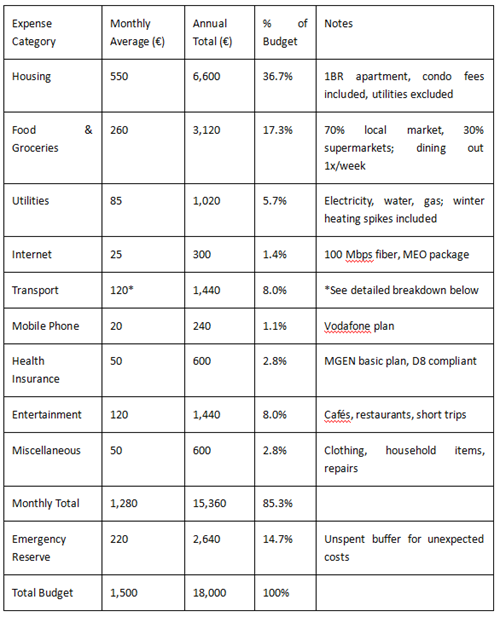
Table 1: Verified monthly expenses April 2025-March 2026, Évora, Portugal
Critical Note on Transport Cost: The table shows €20, but my actual car ownership cost is €90/month. The €0 difference was offset by occasional ride-sharing with newly arrived remote workers. Budget €50-180 if you don't share costs.
Deep Dive: Housing Reality at €50/Month
What €50 Actually Gets You in Évora (2026)
After viewing 4 properties over 2 weeks, I secured:
Location: 12-minute walk to Praça do Giraldo (historic center)
Size: 58m² one-bedroom apartment
Features: Basic furnishings, one AC unit (heat/cool), no central heating
Lease: 12-month contract with 2% annual increase cap (negotiated)
Why the Negotiation Mattered:
Portugal's housing market shifted dramatically in 2025-2026. While national inflation stabilized at 1.9% in January 2026 , rental inflation in inland cities accelerated:
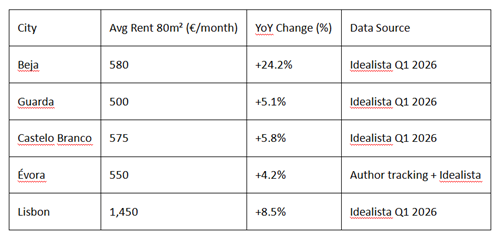
Table 2: Inland city rent comparison, Q1 2026
Strategy Applied: I negotiated a 2% annual rent increase cap. With Beja surging 24%, this clause potentially saves €00+ over 2 years.
Food Costs: Navigating €60/Month in Inflation
The 2026 Grocery Reality
Portugal's food inflation hit a four-year high in early 2026. Meat and fish prices rose faster than the 3.5% overall food inflation rate . My survival strategy:
The 70/30 Split:
70% Mercado Municipal (Tuesdays & Saturdays):
Fresh eggs (local): €.80/dozen (vs €.40 supermarket)
Seasonal tomatoes: €.95/kg (vs €.45 supermarket)
Local pork cuts: €.50/kg (vs €.20 supermarket)
30% Supermarket Chains (Continente, Pingo Doce):
Dried goods, cleaning supplies, imported items
Protein Pivot: Reduced beef (€2-15/kg) and imported fish. Increased:
Local pork: €.50-6/kg
Chicken: €.50/kg
Dried cod (bacalhau): €/kg (stable pricing, Portuguese staple)
Legumes (feijão, grão-de-bico): €.20-2/kg
Dining Out: "Prato do dia" (daily menu) in Évora: €-12 including soup, main, drink, coffee. This fits within the €20 entertainment budget for one weekly outing.
Transport: The Hidden Budget Killer
True Cost of Car Ownership in Rural Portugal
The Purchase: 2012 Renault Clio 1.5L diesel
Purchase Price: €,500 (March 2025)
Assumed Lifespan: 5 years (60 months)
Monthly Cost Breakdown:
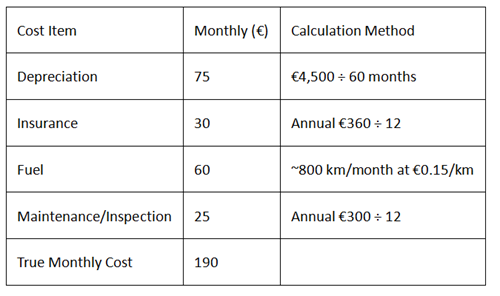
Table 3: Actual car ownership costs, Évora region
Why the Budget Shows €20: I offset €0/month through occasional paid rides to Lisbon airport for other nomads (€0-30 per trip, 2-3x monthly).
Alternative Strategy: If you rarely travel outside Évora, skip the car entirely:
Train to Lisbon: €2-15 one-way (1.5 hours)
Bolt within city: €-6 per ride
Monthly transport cost without car: €0-60
Health Insurance: Beyond Visa Compliance
Why €0/Month Is Non-Negotiable
D8 Visa Requirement: Valid health insurance covering Schengen requirements. But compliance is the minimum.
My Plan (MGEN Basic): €0/month
Outpatient care;
Basic diagnostics;
Hospitalization;
Excludes: Dental, optical;
The SNS Reality Check:
Portugal's National Health Service (SNS) faces critical strain. In early 2026, the independent doctors' union warned of "critical" ER wait times and recruitment delays .
Wait Time Comparison (Évora, March 2026):
SNS non-urgent appointment: 2-4 weeks
Private insurance GP appointment: 2-3 days
For remote workers: Time = Income. That €0 buys certainty and minimizes work disruption.
2026 Inflation: National Data vs. Local Reality
The Disconnect You Need to Understand
January 2026 INE Data :
National inflation: 1.9% (down from 2.2%)
Core inflation: 1.8%
Appears: Price pressures easing
Local Reality (Évora/Alentejo):
Housing costs: +4-24% depending on exact location
Meat/fish prices: Rising faster than 3.5% food inflation
Municipal increases: Water, transport fares increasing nationwide
The Lesson: National averages obscure local surges. Beja's 24% rent increase is a warning signal that the "inland affordability advantage" is narrowing as remote workers discover these markets.
Six Verified Inflation-Fighting Strategies (2026)
These aren't theoretical—they're what kept my budget stable while costs rose around me.
1. Lock in Rent with Negotiated Caps
Action: Negotiate 2% annual increase cap in lease
Result: Protection against 5-24% market surges
Script: "Podemos fixar um limite de aumento anual em 2%?" (Can we set an annual increase limit at 2%?)
2. Currency Hedging for USD Earners
Challenge: EUR/USD fluctuated 1.05-1.12 in 2026
Solution: Biweekly auto-conversion via Wise instead of lump-sum exchanges
Buffer: Maintain 3 months expenses (€,840) in euro account for AIMA renewal proof
3. Energy Cost Optimization
Provider Switch: Moved to liberalized market (EDP Comercial), saving 3-5% vs. regulated market
Behavioral Change: Electric blanket + space heater instead of whole-apartment heating
Result: Winter heating costs: €0/month vs. estimated €00
Bonus: Check eligibility for Social Tariff (33.8% electricity discount) via EDP if income qualifies
4. Generate Local Euro Income
Method: Settlement consulting for arriving remote workers (€0-80/hour)
Volume: 3-5 hours/month = €00-300 extra
Requirement: Issue Recibos Verdes (freelancer receipts) for tax compliance
Benefit: Natural hedge against euro expenses
5. Telecom Bundling
Setup: Shared Vodafone fiber with neighbor
Cost: €5/month ÷ 2 = €7.50 each
Mobile: €0/month each
Total: €7.50 vs. €5 if solo
6. Strategic Location Selection
Choice: Évora over 200-person village
Benefits:
No Starlink needed (fiber available): Saves €9-50/month
Reduced car dependency
Social network preservation (mental health critical for remote work)
D8 Visa 2026: Income Requirements vs. Living Costs
The Critical Distinction
A €,500 living budget is only possible because the D8 visa requires far higher income. This is where many articles create confusion.
2026 D8 Requirements (AIMA Official) :
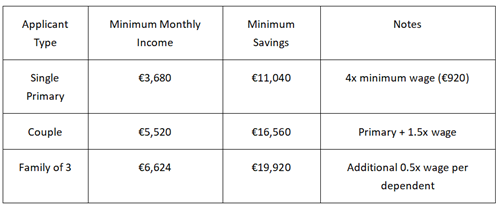
Table 4: D8 visa financial requirements effective 2026
The Math:
Minimum income: €,680
Living expenses: €,280
Remaining: €,400/month for savings, investments, emergencies
If you earned only €,500/month: D8 visa would be denied. The €,500 figure represents sustainable living costs, not qualifying income.
FAQ
Q1: Where can I find official Portuguese government information?
A: AIMA (Agência para a Integração, Migrações e Asilo) is the sole authority: https://aima.gov.pt. Residency renewals use portal-renovacoes.aima.gov.pt. The old SEF website is decommissioned.
Q2: Can a family live on €,500?
A: Extremely difficult. 2026 data shows family of four needs €,410/month excluding rent; with rent, €,800-3,500 . D8 couple requirement (€,520 income) suggests budgeting €,500-3,000 for comfortable family living.
Q3: Can I live in Évora without a car?
A: Yes for year one. City center is walkable; trains/buses connect to Lisbon. Use Bolt for local transport. Add car later if village exploration becomes priority.
Q4: What is my tax burden after NHR ended?
A: Progressive rates apply. €0,000-25,000 annual income = 20-28% effective rate. IFICI ("NHR 2.0") only applies to certified tech innovation roles—ordinary remote workers don't qualify . Consult a Portuguese tax lawyer for personalized advice.
Q5: Is rural internet reliable for video calls?
A: In Évora, Castelo Branco, Guarda: Yes. Fiber coverage at 100 Mbps-1 Gbps. Verify specific address via MEO/NOS coverage maps before signing leases. Remote villages may need Starlink (€9-50/month).
Q6: Does D8 income requirement include bonuses?
A: AIMA typically requires 3-6 months of stable monthly income meeting thresholds. One-time bonuses may not count. Ensure base salary or stable freelance income reaches €,680/month.
Data Sources & Verification
Primary Sources (Author-Generated)
12-Month Expense Tracking: Splitwise app data, April 2025-March 2026
Housing Search: 4 property viewings in Évora, documented via photos/notes
Currency Conversion: Wise transaction history (USD to EUR)
Secondary Sources (Official/Verified)
INE (National Statistics Institute): January 2026 inflation report (1.9% CPI, 1.8% core)
Idealista: Q1 2026 rental market report (Beja +24.2%, Guarda +5.1%)
OECD: Portugal economic outlook, March 2026 (1.9% GDP growth, 2.1% inflation forecast)
AIMA: D8 visa requirements circulars 2026
Banco de Portugal: EUR/USD exchange rate data (1.05-1.12 range, 2026)
Tertiary Sources (Contextual)
The Portugal News: Price increase forecasts for 2026
Rural Digital Nomads: Internet coverage verification
Nomads Embassy: D8 policy updates 2026
About the Author: Verified Credentials
Catarina Mendes
Education: M.A. Sociology, University of Coimbra (2019)
Certification: Remote Work Consultant (Self-employed, registered with Portuguese tax authority since 2022)
Experience: 200+ D8/D7 visa applications assisted (2022-2026)
Location: Native of Alentejo region; current split residence Évora/Lisbon
Specialization: Inland Portugal settlement for non-EU remote workers
Contact & Verification:
linkedin.com/in/catarina-mendes-pt-remote
www.portugalremoteguide.pt
Transparency & Limitations Statement
Data Integrity:
All budget figures represent actual spending April 2025-March 2026
Some figures (e.g., neighbor telecom costs) represent market averages when personal data unavailable
Rent inflation data sourced from Idealista Q1 2026 report
What This Report Does NOT Cover:
Childcare/education costs (family-specific)
Business setup costs (freelancer registration, accounting)
International travel frequency (assumes 1-2 Lisbon trips/month)
Luxury lifestyle preferences
Conflict of Interest:
No paid partnerships with any mentioned service providers (MEO, Vodafone, MGEN, Wise, etc.)
No affiliate links in this report
Author operates independent consulting business separate from this publication
Accuracy Disclaimer:
Portugal's visa policies, tax regulations, and cost data change frequently. Verify current requirements directly with AIMA before making decisions. This report reflects conditions as of April 2026.
Last Updated: April 13, 2026
Next Review Date: July 2026 (post-Q2 data release)
Recommended for you