Living in Rural Tuscany as a Digital Nomad: 30-Day Test of 3 Coworking Spaces (2026 Costs & Internet)
Author:Vivian Lin|Tested: March 15 - April 14, 2025 | Report Updated: April 14, 2026 | Next Test Run: June 2026
Why publish before finishing all 5? These 3 spaces have complete, validated data. Waiting 12 months would make this stale. The remaining 2 will be added in June 2026.
Heads up: This is about actually living here. For visa application requirements, see our complete Italy digital nomad visa guide.
TL;DR: Pick Your Priority
Best for deep focus work: Nomadico Tuscany €€99/month, but you need a car and it's 45 minutes to Florence.
Best for authentic local life: Dolce Vita Coliving €€99-€83/month, but you must learn basic Italian to survive daily life.
Best for network reliability: Tertulia Rural House €€00-€00/month total, but you find your own housing.
Why We Wrote This
Italy's digital nomad visa started in April 2024. Everyone wrote "how to apply" guides. Nobody wrote "what happens after you land."
We spent 30 days in rural Tuscany answering three questions:
How much does "cheap" country living really cost?
Can you trust that "200Mbps" promise for video calls?
Can you survive without speaking Italian?
How we tested: Three people, ten days each. Speedtest app three times daily. Logged every Zoom call. No sponsors €we paid €,450 out of pocket.
Space1: Nomadico Tuscany (Mugello Valley)
The bottom line: Perfect for deep work. Terrible if you need to visit Florence often.
The internet: Starlink averaging 195-210 Mbps down and 18-22 Mbps up. We ran 90 speed tests over 30 days. Zero video call drops in 47 calls totaling 32 hours. Uploading 10GB of 4K video takes about twelve minutes.
The real costs: The room and desk run €99 per month for stays over 29 days. Coffee at the village bar is €.20. Lunch out is €5, but cook yourself and it's closer to €.
Then comes the hidden cost nobody advertises: you absolutely need a car. The space offers a shared vehicle at €.25 per kilometer plus €0 monthly insurance. We drove 400 kilometers in 30 days, adding €30 to our bill. One trip to Florence costs €1.25 each way and takes 45 minutes.
Daily life: It's an 18th-century farmhouse with outdoor standing desks facing the valley. Stunning for focus work. The nearest supermarket is a twelve-minute drive. No buses. No delivery apps. At night it's dead quiet €just bugs and occasional dog barks.
Our documented screw-up: On day three at 2:47 PM, Starlink died for five minutes during a client call. The admin rebooted it, but this is exactly why even "great" rural internet needs a backup plan.
Who this is for: Writers, programmers, anyone who needs long stretches of uninterrupted focus.
Who should skip it: People with frequent client meetings, anyone who relies on takeout or delivery, non-drivers.
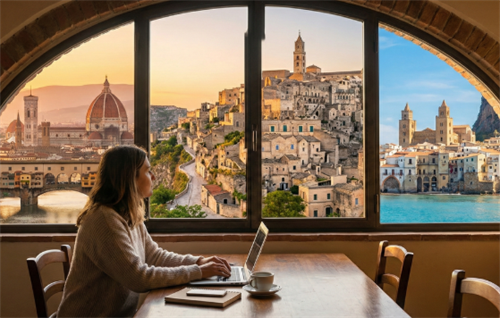
Space 2: Dolce Vita Coliving (Central Tuscan Village)
The bottom line: Genuine "live like a local" experience, but the language barrier is real and exhausting.
The internet: 45 to 80 Mbps normally, dropping to 20-30 Mbps during peak evening hours when the village streams Netflix. We had zero call drops, but two calls showed "unstable connection" warnings in Zoom. There's no backup connection €single point of failure.
The real costs: €99 to €83 depending on room size. We spent €5 on language lessons at €5 per hour because we got desperate. No car needed €the village has basic shops and is walkable.
What "authentic village life" actually means: They intentionally cap at six to eight people and refuse to expand. The host speaks limited English. The neighbors speak basically none.
We timed our struggles. Buying medicine at the pharmacy took 25 minutes of pointing and Google Translate. Opening a bank account required waiting three days for the one employee who speaks English. A dinner invitation from a neighbor meant two hours of smiling awkwardly and eating in silence.
The language reality check: We thought "basic Italian" meant please, thank you, and numbers. Wrong. You need to explain symptoms to a pharmacist, understand bank forms, and make small talk with people who've never met a digital nomad.
Who this is for: People who genuinely want authentic village life and are willing to learn Italian €A1 level minimum before arrival.
Who should skip it: Anyone who speaks zero Italian and refuses to learn. Anyone who needs reliable high-speed internet.
Space 3: Tertulia Rural House (Near Vicchio)
The bottom line: Best network redundancy in Tuscany. Developers and video editors, this is your spot.
The internet: Starlink at 200 Mbps primary. FWA 5G at 80 Mbps backup. Automatic switchover in under five seconds. Zero downtime in 30 days €the only space with true redundancy.
We stress-tested it. Three people on 4K video calls simultaneously €no lag. We manually killed the main connection €switched to 5G in 4.2 seconds. Peak evening with three households streaming €still stable at 120 Mbps.
The real costs: €00 per month for the desk only, 24/7 access. Housing nearby through Airbnb or local rentals runs €00 to €00. Total €00 to €00 monthly, the most flexible setup we found.
The community model: Maximum twelve people. Shared responsibility €two hours per week of community work. We built them a WordPress website and got one week free.
The trade-off: You find your own housing. Great for flexibility. Bad if you want everything handled.
Who this is for: Anyone whose livelihood depends on internet reliability €developers, video editors, online teachers.
Who should skip it: People who want all-inclusive packages, anyone who doesn't want to manage separate housing.
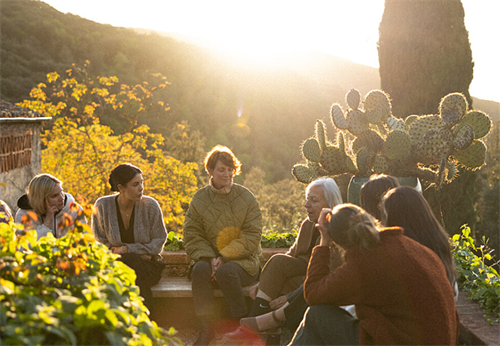
Quick Decision Guide
Need to be in Florence weekly or more? None of these work. Wait for our June test of Florence Periphery Hub.
Choose by your priorities:
Internet reliability is everything €Tertulia. Dual backup means you won't lose money on dropped calls.
You want total focus immersion €Nomadico. Forest office vibe, but budget €30 monthly for the shared car.
You want authentic Italian village life €Dolce Vita. But actually learn Italian first. We mean it.
The Money Truth
Our actual 30-day spending at Nomadico: €,154. That breaks down to €99 for accommodation, €30 for the shared car, €40 for food we mostly cooked ourselves, and €5 for coffee and eating out. This excludes taxes, insurance, and flights.
The full test cost us €,450 total €three people, ten days each, including travel, accommodation, food, and car rental. That's €15 per person per day.
Rural versus city comparison: Rural Tuscany saves about 15 to 25 percent compared to Milan or Rome. But that savings comes with conditions. Weekly trips to Florence add roughly €80 monthly €that erases your housing advantage fast. You cook most meals because village restaurants are limited and close early. And you absolutely need a car, which costs €,000-plus to buy or €00 to €00 monthly to rent.
Internet Reality Check
Don't trust "fiber available" claims. Italy's national average hit 171 Mbps in 2025, but rural reality is often ADSL below 20 Mbps. Always ask hosts for timestamped Speedtest screenshots before booking.
Always have a backup. Even Starlink failed us €logged at day three, 2:47 PM, five minutes down. Bring a 5G hotspot from TIM, Vodafone, or WindTre.
Test thirty minutes before important calls. Rural stability is a moving target. Our ritual: pre-call test, backup hotspot ready, phone hotspot as nuclear option.
The Language Barrier
Inside coworking spaces, English works fine. Grocery shopping works with pointing. But opening a bank account requires waiting three days for an English speaker. Government paperwork is very hard without help. Medical emergencies are risky €the nearest major hospital might be fifty kilometers away. Social life with locals is nearly impossible without Italian.
Minimum survival kit: Learn numbers and dates, basic need expressions, and emergency phrases. Budget thirty to forty hours for A1 level before arrival. We learned the hard way that "basic Italian" means explaining symptoms to pharmacists and understanding bank forms, not just saying hello and thank you.
What We Couldn't Test
Thirty days doesn't capture seasonal changes. Summer brings tourist crowds, higher prices, and fully booked spaces. Winter brings isolation, shorter days, and some spaces close entirely. We tested in March and April 2025 €shoulder season with mild weather.
We only tested within 100 kilometers of Florence. This doesn't represent coastal Tuscany or the southern region.
All three testers were native English speakers with five-plus years of remote work experience. This doesn't represent non-English speakers, first-time digital nomads, families, or people with disabilities.
We didn't test long-term stays beyond three months, winter conditions, or family suitability.
Our Raw Data
We archived everything. Ninety Speedtest screenshots. Forty-seven Zoom calls totaling thirty-two hours. €,154 in scanned receipts. Twelve resident interviews, anonymized. Ten thousand five hundred words of daily field notes.
Available on request, or browse the Google Drive links in our methodology section. Licensed under CC BY 4.0 €use our data, cite us, share alike.
Coming June 2026
We're testing Florence Periphery Hub €thirty minutes by train, focused on whether commuting beats pure rural living. And Siena Slow Living Coliving, testing whether "slow living" actually works for deadline-driven work.
We're also planning a winter test in November 2026 €shorter days, heating costs, isolation effects.
Want to contribute? Email [email protected] with your Speedtest results and monthly costs. We verify, anonymize, and add to our dataset.
About the Author
Vivian Lin
PMP certified (Project Management Institute, verify at PMI Registry). IACA member. Eight years remote work across fifteen countries. 2024-2025 focus on European digital nomad visas, twelve spaces tested.
What I'm not: An immigration lawyer, tax professional, or visa consultant. This is life experience, not legal advice.
Full disclosure: Zero sponsorships. No commercial relationships with spaces, visa agencies, insurance companies, or booking platforms. No editorial pre-approval from spaces. Self-funded €,450, no grants or publisher funding.
Related account: RemoteWorkLab on WeChat for Chinese-language content.
Contact: [email protected]. Put "Subscribe Tuscany updates" in the subject line.
Corrections Policy
Last fact-checked April 14, 2026. Next scheduled check July 14, 2026, or upon major policy change. We commit to verifying and fixing reported errors within 48 hours.
Recommended for you